The 7 Core Principles of Temporary Traffic Management (TTM) in Qatar
Published: December 03, 2025
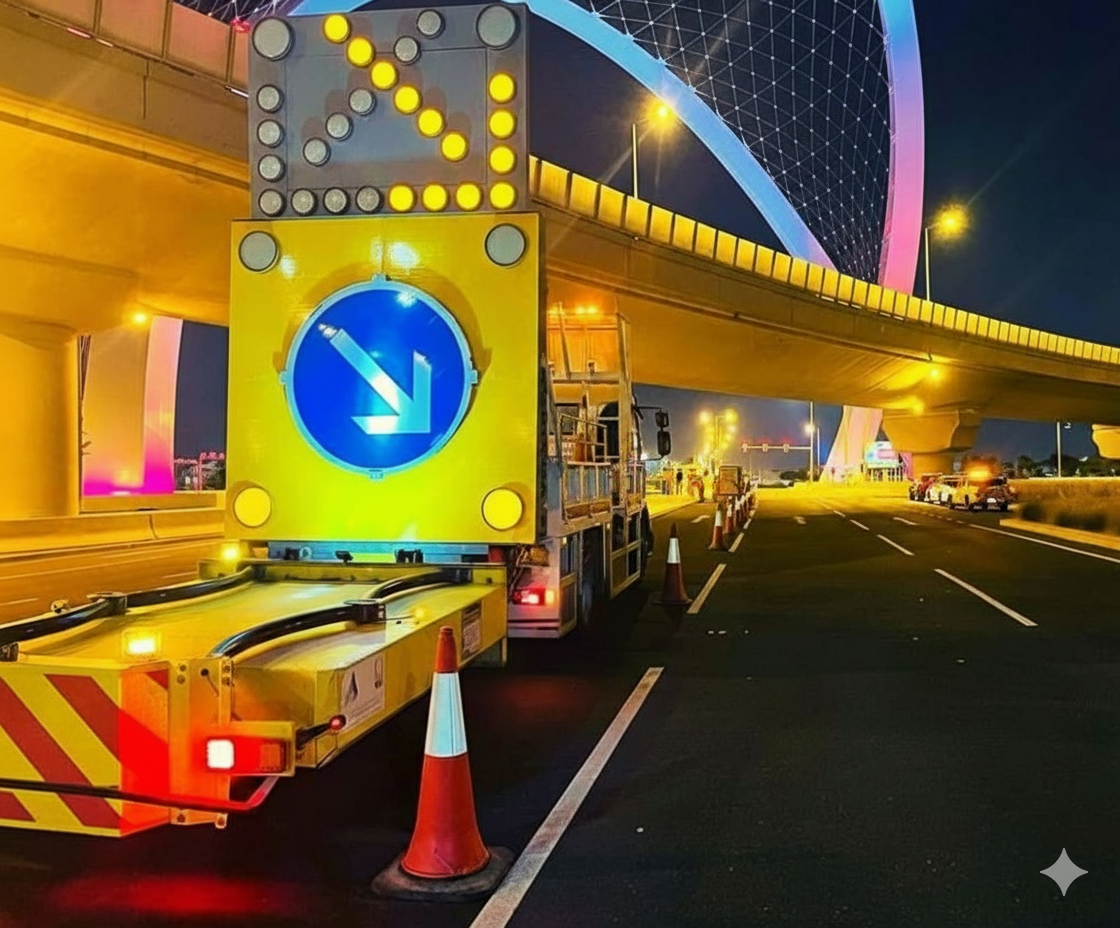
Temporary Traffic Management (TTM) plays a critical role in ensuring safety and efficiency during road works across Qatar. Whether the project is small maintenance work or a major highway diversion, every contractor must follow the standards defined in the Work Zone Traffic Management Guide (WZTMG) issued by Ashghal and the Ministry of Interior (MoI).
In this article, we explain the seven core principles of TTM that every contractor, consultant, and Site Traffic Management Supervisor (STMS) must follow in 2025.
The 7 Core Principles of TTM
1. Responsibility to All Road Users
Every work zone must be designed to protect all categories of road users, including:
- Drivers
- Pedestrians
- Cyclists
- Public transport users
Contractors must ensure safe passage through or around the work zone without confusion or sudden changes.
2. Elimination of Conflicts
Work zones should remove or reduce conflict points between live traffic, workers, heavy machinery, and pedestrians. Physical separation using cones, barriers, screens and channeling devices is mandatory to avoid risk.
3. Appropriate Speed Limits
Speed limits inside work zones must reflect the road classification, traffic volume, type and duration of work, and worker proximity to live traffic. Clear signs must be installed well in advance to ensure safe deceleration before the work area.
4. Protection of the Workforce
Worker safety is a top priority. Measures include:
- Safety buffers
- Temporary safety barriers
- High-visibility clothing
- Truck/Trailer Mounted Attenuators (TMAs)
- Restricted access into unsafe areas
Workers must not stand or walk inside live traffic lanes under any circumstance.
5. Early Warning of Hazards
Road users must receive clear, early and continuous warning using:
- Advance warning signs
- Electronic Arrow Boards (EABs)
- Variable Message Signs (VMS)
- Highly reflective equipment
This ensures drivers understand what to expect and how to react safely.
6. Clear Direction to All Road Users
Work zones must provide unambiguous guidance using proper signage positioning, consistent sign sizes, correct taper lengths, direction arrows, and lane narrowing indications. Consistency helps drivers predict and respond confidently.
7. Proper Deployment of Traffic Control Devices (TCDs)
All signs, barriers, cones, and devices must:
- Follow Qatar Traffic Control Manual (QTCM)
- Be installed as shown in approved Traffic Management Drawings (TMDs)
- Remain visible day and night
- Be regularly inspected and maintained
Incorrect or poorly installed TCDs are among the most common causes of non-compliance notices.
Why These Principles Matter
Following these seven principles ensures: Maximum safety for workers, minimised disruption to road users, smooth and professional project execution, and full compliance with Ashghal and MoI standards. In Qatar’s fast-growing road infrastructure environment, strong TTM practices are essential for every contractor aiming to deliver safe, high-quality projects.
Need assistance with your project?
Contact Us Today